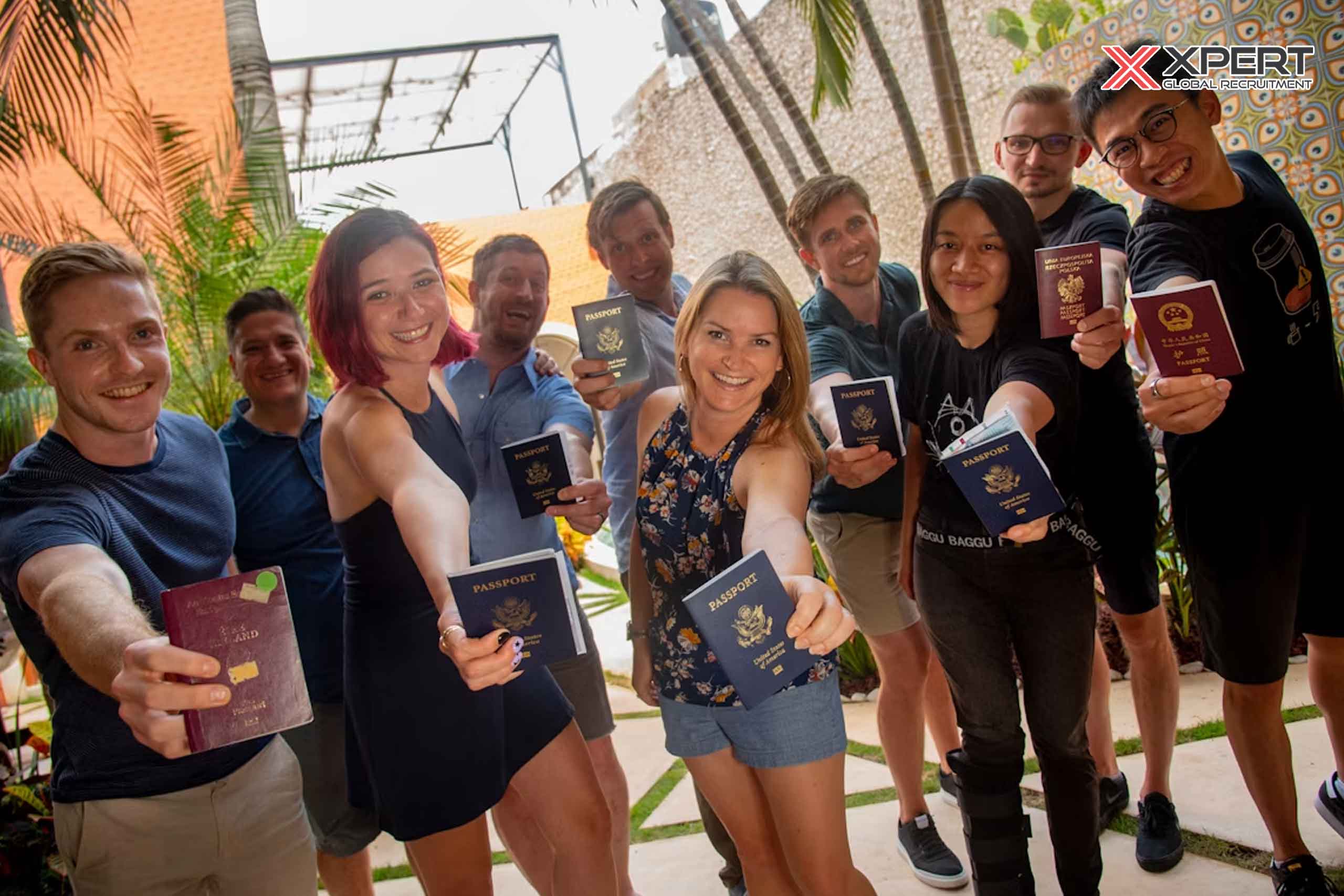



Finding the right job overseas involves more than matching your skills and experience with an employer. Your academic degree, professional certification, or vocational qualification may also need to be officially recognized in the country where you plan to work. Understanding qualification recognition for working abroad can therefore be an important part of preparing for an international career.
For candidates seeking international opportunities, understanding these requirements early can help prevent unnecessary delays and make the recruitment process more straightforward.
What Is Qualification Recognition for Working Abroad?
It is the process of determining how an academic, vocational, or professional qualification obtained in one country compares with qualifications and standards in another.
Why International Qualification Recognition Matters?
International qualification recognition helps employers, regulators, and organizations understand the level and relevance of qualifications earned under a different education system.
Imagine, for example, that an engineer, healthcare professional, teacher, or technician has several years of experience in their home country. Their professional background may be strong, but the prospective destination may use different degree classifications, licensing requirements, or competency standards. Recognition provides a framework for comparing those qualifications with local requirements.
At Xpert Global Recruitment, international candidates can receive recruitment support when exploring career opportunities across different markets and industries.
How Does Foreign Qualification Recognition Work?
The process of foreign qualification recognition varies considerably between countries. There is no single worldwide authority responsible for recognizing every degree or qualification.
Candidates will generally need to identify the organization responsible for recognition in their intended destination. This might be an education authority, government department, credential evaluation service, professional association, or occupational regulator.
Applicants may be asked to provide documents such as degree certificates, academic transcripts, professional certificates, proof of training, course details, and identification. Documents issued in another language may also require an authorized translation.
The relevant organization then assesses the qualification according to its established criteria. The outcome may confirm equivalence with a local qualification, identify the corresponding education level, or outline additional requirements that must be completed.
Candidates should check these requirements before accepting employment or making significant relocation arrangements.

Qualification Recognition for Working Abroad in Regulated Professions
The importance of qualification recognition for working abroad is particularly clear in regulated occupations. A regulated profession is one where specific qualifications, registrations, licences, or professional standards are legally required. Requirements vary by country but can apply to areas such as healthcare, engineering, education, law, accountancy, and certain technical occupations.
This is where professional qualification recognition abroad becomes especially important.
Some professionals may be granted recognition directly, while others could be required to complete an examination, supervised practice, additional training, or another form of competency assessment.
What Is an Overseas Qualification Evaluation?
An overseas qualification assessment generally evaluates a qualification earned in another country to establish its level or comparability within the destination country’s education or professional framework.
An assessment can be useful for several purposes. It may support a job application, professional registration process, immigration requirement, further education application, or employer verification.
Preparing for Foreign Qualification
Candidates seeking Recognition of foreign qualifications should begin preparing documentation as early as possible.
Start by gathering original degree certificates, transcripts, professional registrations, training certificates, employment references, and any documents relating to practical experience. Make sure names, dates, qualification titles, and institutions are consistent across your documentation.
You should then check whether documents need to be certified, legalized, apostilled, or officially translated.
Requirements should always be confirmed with the relevant authority rather than assumed based on another person’s experience. Even candidates with similar degrees can face different requirements depending on their university, course content, profession, nationality, or intended destination.
Benefits of Completing International Qualification
Starting an international qualification before reaching the final stages of recruitment can provide several advantages.
First, it gives candidates time to identify missing documents or additional requirements. Obtaining historical university transcripts or professional records can sometimes take longer than expected.
Second, early preparation can help candidates present themselves more clearly to employers. Being able to explain the local equivalence or recognition status of a qualification can make it easier for recruiters to understand a candidate’s educational background.
Third, it can reduce the risk of reaching an advanced stage of recruitment only to discover that additional professional approval is required.
For international candidates, preparation is often one of the most effective ways to make an overseas job search more efficient.

Qualification Recognition for Working Abroad: Navigating International Recruitment
Foreign degree recognition and international recruitment frequently go hand in hand. Employers recruiting overseas talent need to understand whether candidates have the skills, qualifications, and professional status required for their vacancies.
Candidates should be transparent about where their qualifications were obtained and whether recognition has already been completed or is still in progress.
Xpert Global Recruitment connects employers and candidates across international markets, helping professionals explore suitable career opportunities based on their skills, experience, and qualifications.
Plan Before You Move
Completing professional qualification recognition should ideally be part of your career planning rather than something considered only after relocating.
Before moving, research your profession, destination country, regulatory authority, qualification requirements, and expected processing times. If additional examinations or training are required, include these in your relocation timeline and budget.
An overseas qualification evaluation may also be required as part of this preparation, particularly when an employer or authority needs formal evidence of academic comparability. Requirements can change, so candidates should always verify current information through the relevant official authorities.
Make Qualification Recognition Part of Your Career Plan
Qualification recognition for working abroad can be a crucial step towards turning overseas career ambitions into realistic employment opportunities. By understanding how qualifications are assessed, preparing documents early, and checking professional requirements before applying, candidates can approach international recruitment with greater confidence.
Whether you are an experienced professional considering a new market or a graduate looking for your first international opportunity, qualification recognition should be treated as part of your relocation strategy.
With the right groundwork, your qualifications can become a stronger foundation for pursuing opportunities across international borders.
Ready to take your career abroad? Contact us today for expert guidance.