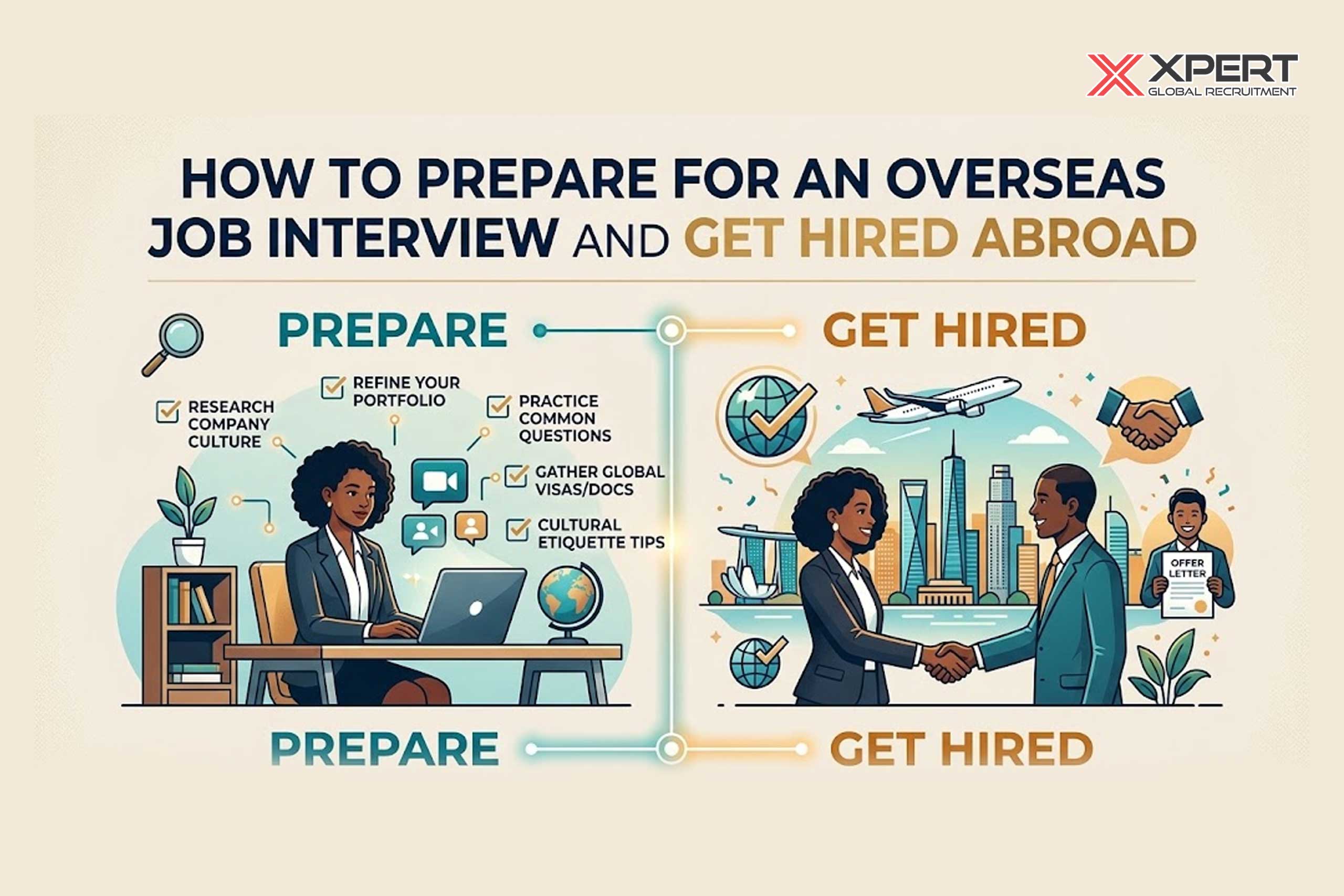



The modern workforce is no longer confined by geographic borders. Nowadays, thousands of professionals are looking beyond their home countries to achieve fresh career paths, higher standards of living, and diverse cultural experiences. However, transitioning to an international career requires more than just applying to standard job boards. To stand out to global employers, you must completely rethink how you present your experience. Building a compelling overseas job profile is the foundation of a successful international search.
Global recruiters review hundreds of applications daily. To capture their attention, your application materials must immediately communicate that you are adaptable, legally employable, and highly skilled. At Xpert Global Recruitment, we specialize in bridging the gap between ambitious talent and top international employers.
Let’s dive into the essential strategies for transforming your professional identity into an elite international application.
1. Crafting a Global Professional CV for Overseas Job Profiles
Your resume is the most crucial part of your application package and the first thing they’ll look at when you apply for jobs abroad. However, a standard local resume is not enough at the international level. Different regions have vastly different expectations regarding format, length, and personal disclosures.
The priority for a professional CV for jobs abroad is the translation of content, not only language but context as well. Your local university or companies may not be recognized by an employer in another country. So, you need to include context for your accomplishments, such as using common language measures, for example, managed logistics for a major national retailer (e.g., top three retailers). Moreover, you must follow the expectations of the region in which you are applying. For instance,
- Europass: Typically has a strict structure, may include a professional photo and language proficiency frameworks (CEFR).
- North American Resume: Strictly avoids personal details such as age, gender, or pictures because of strict anti-discrimination laws and prefers a brief, results-driven format.
- Middle East & Asia: May find it at the top of the page to ask for details of nationality, current location, and visa status explicitly.
2. Optimizing Your Overseas Job Profile for International Careers
In the digital era, your resume does not live in a vacuum. An overseas employment profile covers your LinkedIn profile, job or specialty job board profile, and professional portfolio. These platforms are very popular with international recruiters as they can tap into passive candidates who haven’t applied for a job yet. If you want to be visible online to people all over the world, you have to approach the situation with an algorithm’s mindset. Recruiters use specific combinations of industries, methodologies, and software to search. Make sure your online profiles are full of industry terms and not company-specific jargon.

3. Skilled Worker CV Tips
If you are applying as a skilled migrant, your resume must demonstrate to immigration officials and employers that you have outstanding skills. Here are some critical skilled worker resume tips to increase chances for your application:
- Lead with Your Certifications: International credentials, licenses, or language test scores (like IELTS or TOEFL) should be placed prominently near the top. If local licensing in the destination country is required for your profession, it’s important to clarify whether you have started or finished that process.
- Measure Your Results: Be specific and measurable, such as managed a team of 22 people rather than managed a cross-functional team of 12 engineers in 3 time zones, cutting project delivery time by 22%.
- Emphasize the importance of Soft Skills for Relocation: Technical brilliance is only half the battle. Global employers look for indicators of high emotional intelligence, cross-cultural communication, and adaptability.
4. Mastering the Global Job Application Process
An overseas job profile demands a higher level of preparation and patience than a domestic one. Many qualified candidates are rejected early simply because employers assume the relocation process will be too complex or expensive. You can mitigate this risk by proactively addressing your visa status in your cover letter or profile summary. If you possess dual citizenship, hold an independent working visa, or are entirely self-funded for relocation, make that crystal clear right away.
Additionally, be prepared for a multi-stage remote interview process. This usually involves asynchronous video screenings, technical assessments, and panel interviews via video conferencing. Treat these virtual interactions as essential for making a lasting impression.
5. The Art of Profile Building for Work Abroad
Success in the overseas job profile market doesn’t happen overnight; it is the result of continuous, deliberate work abroad profile building. This means treating your professional brand as an evolving asset that consistently aligns with global market trends.
Start by researching the specific skills shortages in your target country. Most governments publish shortage occupation lists for skilled worker visas. If you notice a specific framework, methodology, or software widely demanded in your target market that you lack, prioritize gaining that certification immediately.
By aligning your skills directly with what global economies are desperately searching for, you transform your profile from a standard application into a highly sought-after solution for international companies.

6. Aligning Your Global Job Profile with Recruiters
Ultimately, a beautiful resume is useless if it never reaches the right eyes. Partnering with a dedicated agency like Xpert Global Recruitment can dramatically accelerate your timeline. Agencies specializing in global mobility have direct pipelines to international employers who are already actively looking for and willing to sponsor talent from overseas.
When you submit your structured overseas job profile to global specialists, you gain access to the hidden job market roles that are never publicly advertised because companies prefer vetted, pre-screened international talent.
Final Thoughts: Your Ticket to the World
The journey to an international career begins with a single, crucial step: viewing your professional self through a global lens. By refining your overseas job profile, tailoring your materials to international formats, and optimizing your digital footprint, you eliminate the friction that often stops international applications in their tracks.
The global market is waiting for your unique skills. Take the time to audit your professional brand today, implement these global standards, and take control of your international career trajectory.