

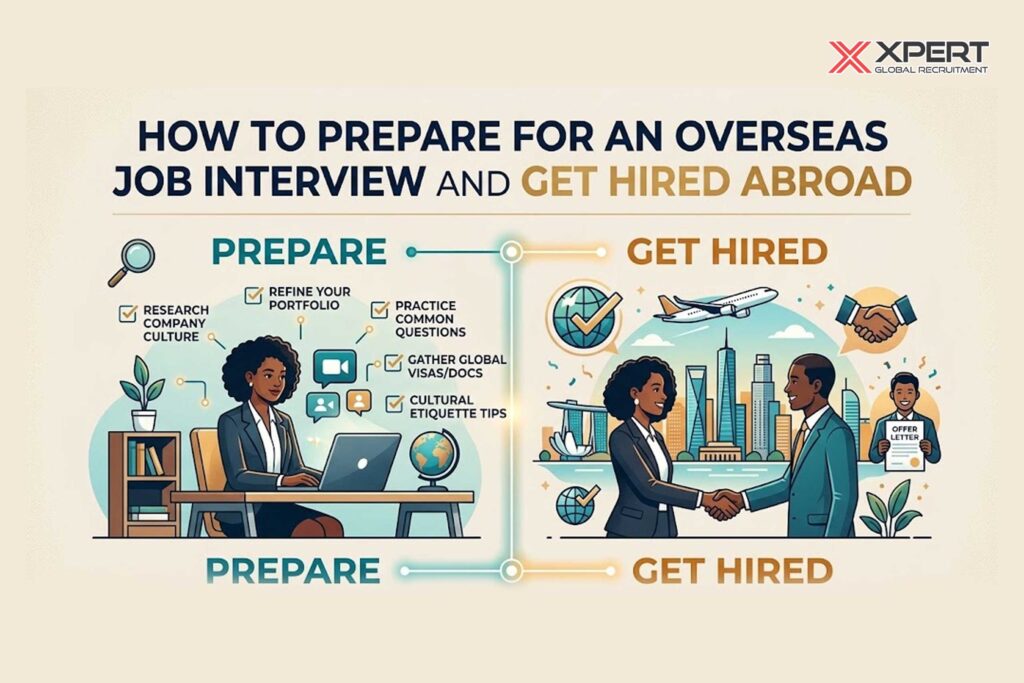
Finding a job in another country can be an exciting step towards better career opportunities, international experience, and personal growth. However, getting shortlisted is only the beginning. Your overseas job interview is often the most important stage because it gives the employer an opportunity to assess your experience, communication skills, confidence, and suitability for the role.
Interviewing for an international position can also be different from applying for a job in your home country. You may need to understand a different workplace culture, communicate through a video interview, discuss relocation, or answer questions about your ability to adapt to a new environment.
Why Is an Overseas Job Interview Different?
An Interview usually assesses more than your technical qualifications. International employers may also want to understand why you want to relocate, whether you can adapt to another culture, and how effectively you can communicate with people from different backgrounds.
During an international job interview, employers may ask about your previous experience, qualifications, professional achievements, language abilities, and motivation for working abroad. They may also want to know whether you understand the practical realities of relocation. Therefore, one of the most useful interview tips is to research both the position and the destination before speaking with the employer.
Strong overseas job interview should include learning about the company, its industry, the job responsibilities, and the skills mentioned in the vacancy.
Research the Employer Before Your Overseas Job Interview
Never attend an interview without knowing basic information about the organisation. Visit the employer’s website and learn about its services, values, locations, customers, and recent activities.
For an international job interview, you should also carefully review the original job description. Identify the main skills and responsibilities and prepare examples showing how your experience matches them.
Research can also help you understand what to expect during an interview. For example, an engineering position may focus heavily on technical experience, while hospitality or customer-service roles may place greater emphasis on communication and problem-solving.
Practice Common Overseas Job Interview Questions
Practice is one of the easiest ways to become more confident before an overseas job interview. You do not need to memorise complete answers. Instead, prepare the main points you want to communicate clearly.
Common interview questions may include:
- Why do you want to work in this country?
- Why are you interested in this position?
- What relevant experience do you have?
- What are your main professional strengths?
- Why should we hire you?
- Are you comfortable relocating?
- How do you work with people from different backgrounds?
- How would you deal with a difficult situation at work?
When practising interview questions for jobs abroad, use genuine examples from your work experience wherever possible. Specific examples are usually more convincing than general statements about being hardworking or reliable.
Show Your Skills During an Overseas Job Interview
Employers want evidence that you can perform the job successfully. Your employment interview is your opportunity to connect your previous experience directly with the employer’s requirements.
Instead of simply saying, “I have good problem-solving skills,” describe a real problem you faced, how you approached it, and what result you achieved.
This approach is particularly helpful during an international job interview because employers may not be familiar with your previous company or local qualifications. Clear examples help them understand the actual level of your experience.
Prepare for Cultural and Communication Differences
International recruitment brings together employers and candidates from different cultural backgrounds. Communication styles, workplace expectations, and interview formats can therefore vary.
Useful tips include speaking clearly, listening carefully to the complete question, maintaining professional body language, and asking for clarification when necessary. You should also prepare for questions for jobs abroad relating to cultural adaptation. An employer may ask how you would adjust to working with an international team or living in a different country.
Get Ready for a Video Interview
Many international employers interview overseas candidates online before progressing with recruitment. Your interview may therefore take place through a video platform rather than face-to-face.
Test your internet connection, microphone, camera, and interview platform beforehand. Choose a quiet location with appropriate lighting and a clean background.
Professional presentation remains important during an international job interview, even when it takes place from home. Dress appropriately, position the camera at eye level, and avoid checking your phone or other screens.
One of the simplest tips is to join the meeting a few minutes early. It reduces stress and gives you time to solve unexpected technical problems.

Be Ready to Discuss Relocation and Working Abroad
International employers need candidates who understand the commitment involved in relocating. During an overseas interview, you may therefore be asked about your availability, preferred location, family circumstances, expected salary, or willingness to relocate.
Include these areas in your overseas job interview preparation rather than trying to decide your answers during the interview.
Some interview questions for global jobs may also focus on work permits, qualifications, or documentation. Answer accurately and avoid making claims about your immigration status or eligibility unless you are certain.
Xpert Global Recruitment works with professionals exploring employment opportunities across international markets, including candidates seeking opportunities with European employers. Professional recruitment guidance can help candidates better understand the different stages involved in pursuing employment abroad.
During Your Overseas Job Interview: Questions You Should Ask the International Employer
Towards the end of an international job interview, employers commonly ask whether you have any questions. You could ask about daily responsibilities, working hours, training, the team structure, contract length, relocation arrangements, or the next recruitment stage. Asking thoughtful questions during an overseas employment interview shows genuine interest in the opportunity.
Final Thoughts on Succeeding in Overseas Job Interview
Success in an overseas job interview comes from preparation, clear communication, and the ability to demonstrate how your skills meet the employer’s needs. Research the company, understand the role, practise realistic questions, prepare examples from your experience, and make sure you are ready to discuss relocation professionally.
If you are planning your next international career move, Xpert Global Recruitment can help connect your skills and experience with suitable opportunities in overseas markets.